
Have you ever felt the ground shake beneath your feet? That’s called an earthquake! Earthquakes can be small, making just a tiny rumble, or they can be so strong that they shake entire buildings. But what causes earthquakes? Let’s explore how and why our planet sometimes shakes!
The Earth’s Crust is Always Moving
The ground beneath us might seem solid and still, but deep below the surface, the Earth is always moving! Our planet is made up of different layers, and the outer layer is called the crust. But the Earth’s crust isn’t just one big piece—it’s actually broken into giant puzzle pieces called tectonic plates.
These plates are always slowly moving, even though we don’t feel it. Sometimes, they slide past each other, push together, or pull apart. Usually, this happens very slowly, but when plates get stuck and then suddenly move, it causes an earthquake!
How Do Tectonic Plates Cause Earthquakes?
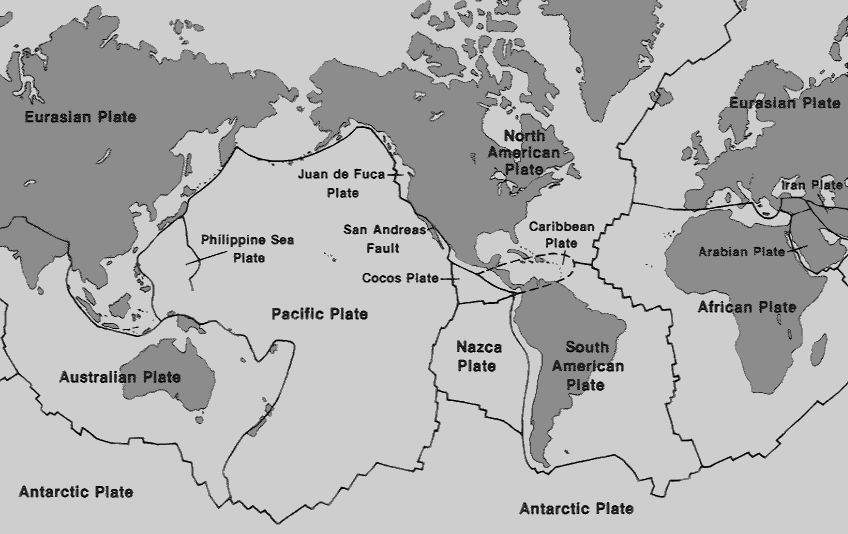
Image credit: USGS
Imagine you’re pushing your hands against each other really hard. If you push and push, your hands might suddenly slip—causing a quick, jerky movement. That’s what happens with tectonic plates!
There are three main ways tectonic plates move that can cause earthquakes:
- Sliding Past Each Other – Sometimes, plates move in opposite directions but get stuck. When they finally break free, an earthquake happens. This happens a lot in places like California, where the San Andreas Fault is.
- Colliding Together – When two plates push against each other, the pressure builds up. Eventually, one plate moves over or under the other, causing an earthquake. This can also create mountains over time!
- Pulling Apart – When plates move away from each other, they can cause cracks in the Earth’s crust, leading to earthquakes. This often happens at the bottom of the ocean.
What Happens During an Earthquake?
When an earthquake happens, waves of energy spread out from the place where the plates moved. This spot is called the focus. The energy travels through the ground, shaking everything in its path! The point on the surface directly above the focus is called the epicenter—this is where the earthquake is the strongest.
Scientists use special tools called seismometers to measure earthquakes. They also use a scale called the Richter scale to tell how strong an earthquake is. Small earthquakes might not even be noticed, but big ones can be powerful enough to damage buildings and roads.
Can We Predict Earthquakes?
Right now, scientists can’t predict exactly when an earthquake will happen. But they do know where earthquakes are most likely to happen—along tectonic plate boundaries. Countries like Japan, Indonesia, Chile, and the United States (especially California and Alaska) have a lot of earthquakes because they sit on major tectonic plate boundaries.
Staying Safe During an Earthquake
If you ever feel an earthquake, remember these safety rules:
- Drop, Cover, and Hold On! Get down on the ground, cover your head, and hold onto something sturdy.
- Stay away from windows and heavy objects that could fall.
- If you’re outside, move to an open area away from buildings and trees.
Fun Fact: Earthquakes Can Happen on Other Planets!
Did you know that Mars and the Moon have their own version of earthquakes? Scientists call them Marsquakes and Moonquakes! Even though they aren’t as strong as earthquakes on Earth, they help scientists learn more about other planets.
Now that you know why earthquakes happen, next time you hear about one, you’ll understand what’s going on deep inside the Earth!