
The Amazing Water Cycle: Nature’s Recycling System
Have you ever wondered where the water in rivers, lakes, or even your glass comes from? It’s all thanks to something called the water cycle, nature’s way of recycling water. The water we use today has been traveling around Earth for billions of years, going through the same amazing process over and over again. Let’s dive in and explore how it works!
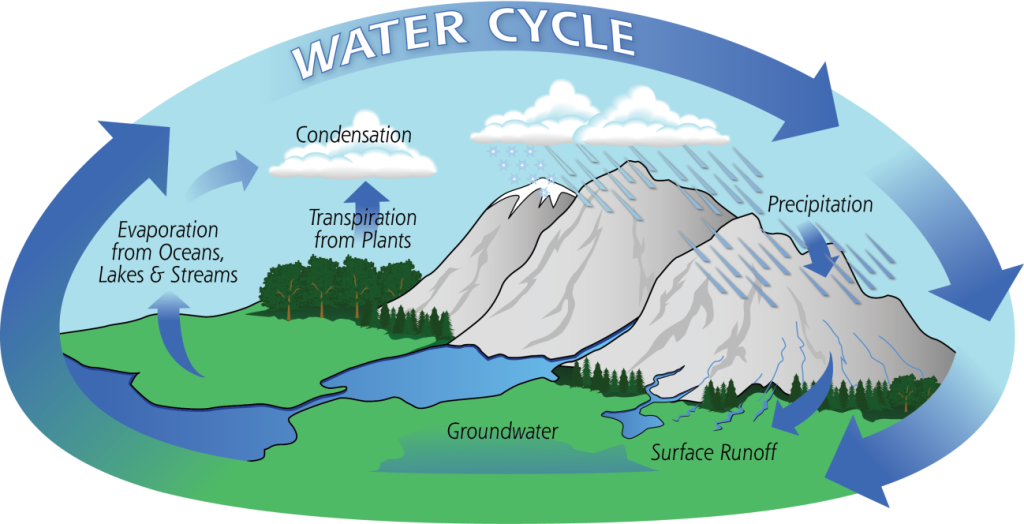
Image Credit: NASA GPM
The water cycle has three main steps: evaporation, condensation, and precipitation. But don’t let those big words scare you—they’re easier to understand than you might think!
First up is evaporation. Imagine a hot, sunny day. When the Sun shines on water in oceans, rivers, lakes, or even puddles, it heats up the water. This heat gives the water energy, causing it to change from a liquid into an invisible gas called water vapor. This process is called evaporation. It’s like when you boil water and see steam rising from the pot, but in nature, it happens much more slowly.
Once the water vapor rises into the sky, it cools down because the air is colder up high. As it cools, it changes back into tiny liquid water droplets. This process is called condensation. These droplets come together to form clouds. If it’s really cold, the water droplets might turn into tiny ice crystals instead. Have you ever noticed how clouds can look soft and fluffy or dark and stormy? The more water they hold, the heavier they get!
When the clouds can’t hold any more water, it falls back to Earth as precipitation. This could be rain, snow, sleet, or hail, depending on the temperature. Precipitation brings water back to the ground, where it can soak into the soil, flow into rivers, or refill lakes and oceans.
But the water’s journey doesn’t stop there. Some water soaks into the ground to become groundwater, which plants and animals use to survive. Other water flows back into rivers and streams, eventually making its way to the ocean. From there, the cycle begins again with evaporation.
Here’s something really cool to think about: the water cycle has been running for billions of years. That means the water you drink today might have once been part of a dinosaur’s drink or fallen as snow on an ancient mountain! This natural recycling system is why Earth never runs out of water—it just keeps moving it around.
The water cycle also affects our weather. When lots of water evaporates, it can create big clouds that bring rainstorms. Without the water cycle, there wouldn’t be rain, rivers, or even life as we know it.
So next time you see a raindrop, splash in a puddle, or look up at the clouds, remember: every drop of water is on an incredible adventure. It’s traveled through the water cycle many times and will keep going for millions of years. Isn’t nature amazing?